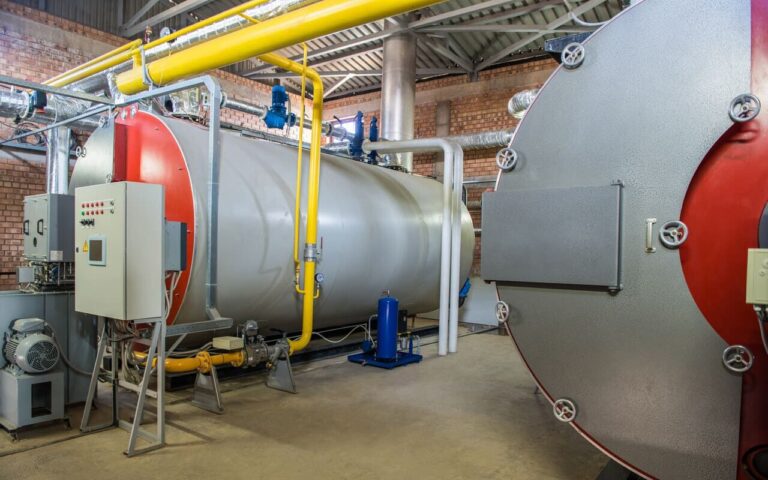
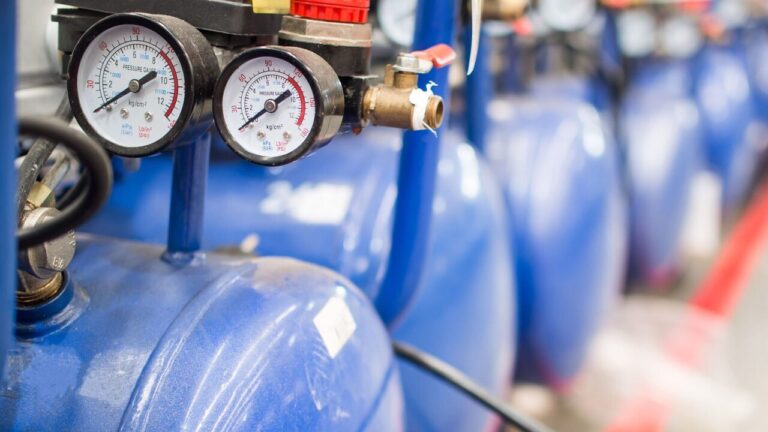
Liquefied petroleum gas (LPG) tanks are classified as pressure vessels and are widely used for the storage and distribution of LPG.
Due to their nature and the risks they pose, their use is governed by a strict regulatory framework at European and national level. Initial and periodic inspections, as well as certification of LPG tanks, are mandatory in order to ensure their safe use and prevent accidents.
Initial Inspection - CE Marking of LPG Tanks
The inspection for the CE marking of gas tanks is mandatory for their distribution and legal use in the European Union in accordance with European Directive 2014/68/EU. The inspection is carried out exclusively by a Notified Body, such as Ergocert Hellas S.A., at the request of the manufacturer.
The Inspection Body evaluates the design of the tank’s construction, monitors the individual construction, and carries out intermediate quality and final inspections in accordance with the requirements of Directive 2014/68/EU.
Periodic Inspection of LPG Tanks
In accordance with applicable national legislation, all LPG tanks are subject to mandatory periodic technical inspections, which are the responsibility of the owner.
The first periodic inspection is carried out five (5) years after the initial certification of the tank's construction and is repeated every five years. The inspection requirements are specified by law, depending on the use and location of the tank:
- For industrial, craft, and professional facilities: FEK 477/B/1993
- For tanks in buildings for domestic use: FEK 1257/B/2003
- For LPG tanks in motor fuel supply facilities (AUTOGAS) at fuel and energy stations: additionally, FEK 1221/B/2009
Inspections generally include, among other things, visual inspection, leak testing, pressure testing, and verification of the proper functioning of safety systems.
Periodic inspections of LPG tanks are divided into two basic categories:
Five-yearly inspection of LPG tanks
During the five-yearly inspection following the initial certification of the tank's construction, at least an external inspection of the tank's condition and a check of the safety valves' operation are carried out. In addition, the thickness of the tank plates may be measured using a special ultrasonic device.
In order to carry out the inspection on underground tanks, it is necessary to uncover the tank in case there is no cathodic protection.
Ten-yearly inspection of LPG tanks
During the ten-yearly inspection following the initial construction of the tank, everything required for the five-yearly inspection is repeated. In addition, a complete internal inspection and/or hydraulic test is carried out, as well as a thickness measurement of the tank plates. In order to carry out the inspection on underground tanks, it is necessary to uncover the tank.
The absence of a valid periodic inspection certificate incurs a fine from state authorities, up to and including criminal penalties or even the revocation of the company's operating license.
Inspection of LPG pipelines
As an independent technical Audit and Inspection Body, Ergocert can perform, in addiition to the LPG tank inspection, the inspection of the LPG pipelines according to the requirements of national legislation.
Relevant Documents
General Inspection Regulation
Product Certification Regulation
Related Services